


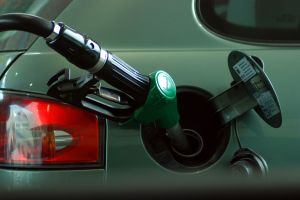
 When your engine will turn over but it won’t start, the first question you need to ask is whether your fuel tank is empty or not. This can prevent some problems and save you on time, if that’s the case. If you can effectively rule out no fuel, the second thing to check is whether or not the tank is too full. Believe it or not, the problem can be from too much fuel. If you open the hood and find that everything is covered with gasoline, don’t try to start the engine. Gasoline is way too flammable to take chances with. Just raise that white flag and get professional help.
If you’re not out of fuel and your vehicle lost power before it died, fuel is probably not getting to the engine. It could be that either the fuel pump isn't pumping or the ECU isn’t triggering the fuel injectors. In either case, a professional will have to troubleshoot it.
When your fuel pump is working properly, you will not even know that you have one. When it fails, you will be left stuck on the side of the road about to have your wallet emptied to pay for a repair bill. Old fuel pumps used to cost about $20 for the part and around $30-$50 labor to put it on the car. Today, electric fuel pumps that reside inside the gas tank cost around $200 for the part, and about $200 for labor.
If you can learn to recognize the warning signs that the fuel pump is getting ready to fail, you might be able to spare yourself the part without becoming stranded. If you are handy with tools, you may be able to save on the labor bill, as well. Weak fuel pumps are not always easy to diagnose in by a mechanic... the reason being that when they are first starting to fail, fuel pumps falter intermittently, manifesting the problem more often at highway speeds than at idle in the shop.
It’s common for people to try fixing other things before tackling the fuel pump, mainly due to the expense. At highway speeds, your car will falter for a mile or so, and then do fine for the next fifty miles. About seventy five percent of the time, when you go to push down on the accelerator, the car will start to go and suddenly seems like it is going to die, then immediately seems to restart and go fine, it’s your fuel pump.
When you lose power on the highway, especially while going uphill, the problem is with the fuel system. After ruling out the fuel filter, the fuel pump is the next bet.
And when your car tries to crank but won’t start, it could be the timing belt or chain is broken. A mechanic can diagnose this. If it isn’t, the problem is the fuel pump. It’s better to have one or more of these symptoms checked out, as it will save you on frustration and probably cash.
Featured BrandsSee All Brands


